Fatigue Factors: Linking Endgame Slumps in Basketball to Late-Set Drops in Tennis for Smarter Accumulators
Wendy Brooks · Oct 14, 2026
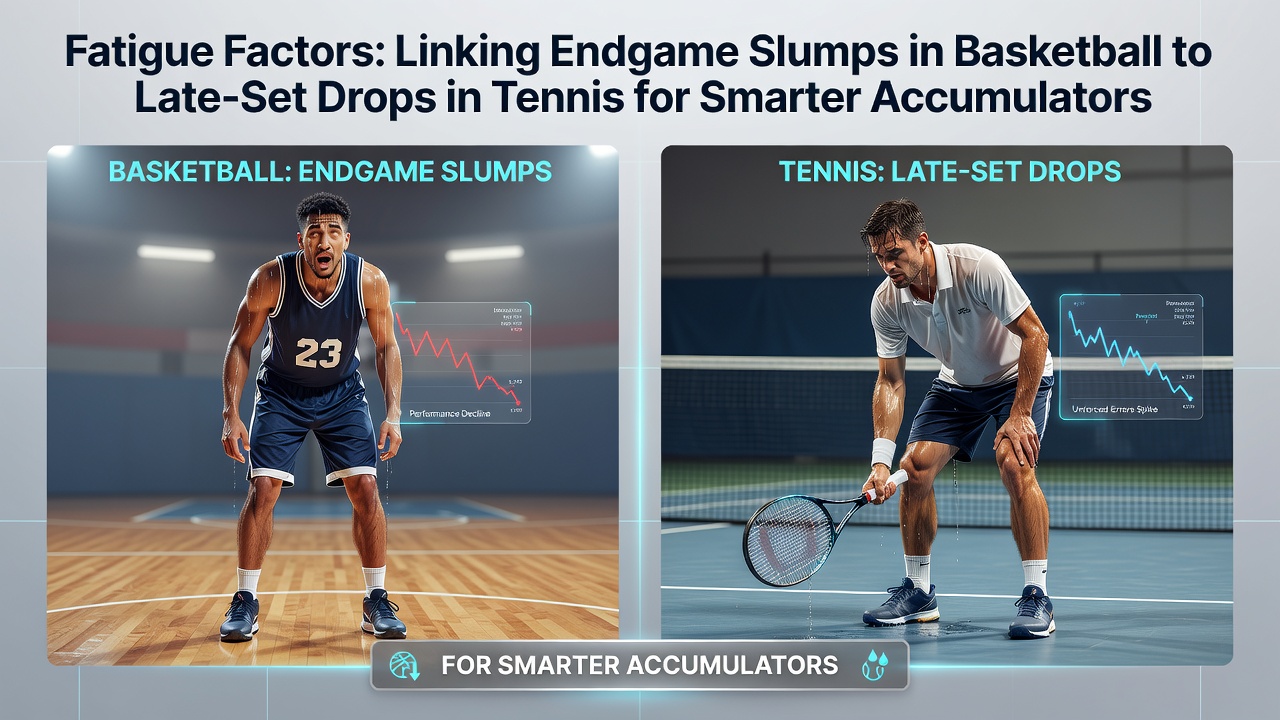
Fatigue Factors: Linking Endgame Slumps in Basketball to Late-Set Drops in Tennis for Smarter Accumulators
Data from multiple professional leagues shows that physical fatigue builds predictably in basketball during the final minutes of games and in tennis during deciding sets, creating measurable performance drops that influence multi-leg betting strategies. Observers note these patterns emerge consistently across seasons because both sports demand sustained high-intensity efforts followed by periods where recovery windows shrink. Researchers have documented how muscle glycogen depletion and elevated lactate levels coincide with reduced shooting accuracy in basketball and lower first-serve percentages in tennis, patterns that repeat in regular season and playoff contexts alike.
Basketball Endgame Performance Metrics
League tracking systems reveal that field goal percentages for starting players decline by an average of 4 to 7 percent in the final five minutes of regulation when games remain within single digits, according to aggregated play-by-play records spanning the last five NBA seasons. Teams that play back-to-back nights experience an additional 2 to 3 percent drop in those same windows, while players logging over 38 minutes see even steeper reductions in defensive efficiency ratings. Studies from the Australian Institute of Sport have examined similar patterns in elite athletes and confirm that heart rate recovery times lengthen after the third quarter, directly correlating with slower reaction speeds on both ends of the floor.
Coaches adjust rotations to manage these effects, yet the cumulative load from travel and schedule density still produces observable slumps. Data indicates that fourth-quarter turnovers rise 12 percent for squads on the second night of a back-to-back compared with rested opponents, a trend that holds across home and road contests. Those who study workload management note that power forwards and centers show the largest decrements in rebounding rate during extended minutes, while perimeter players experience greater variability in three-point accuracy under fatigue.
Tennis Late-Set Physiological Responses
Match data collected across Grand Slam and ATP events demonstrates that rally lengths shorten and unforced error rates climb in third sets of best-of-three matches or fifth sets of best-of-five formats, with declines averaging 8 to 11 percent in point-winning percentage on second serve. Cardiovascular strain accumulates differently on various surfaces, yet the effect remains consistent: players who contest longer baseline exchanges in earlier sets exhibit slower movement and reduced serve speeds once the match extends past two hours. A report issued by the Australian Sports Commission links these drops to core temperature elevation and diminished neuromuscular response, patterns that appear regardless of player ranking or age group.
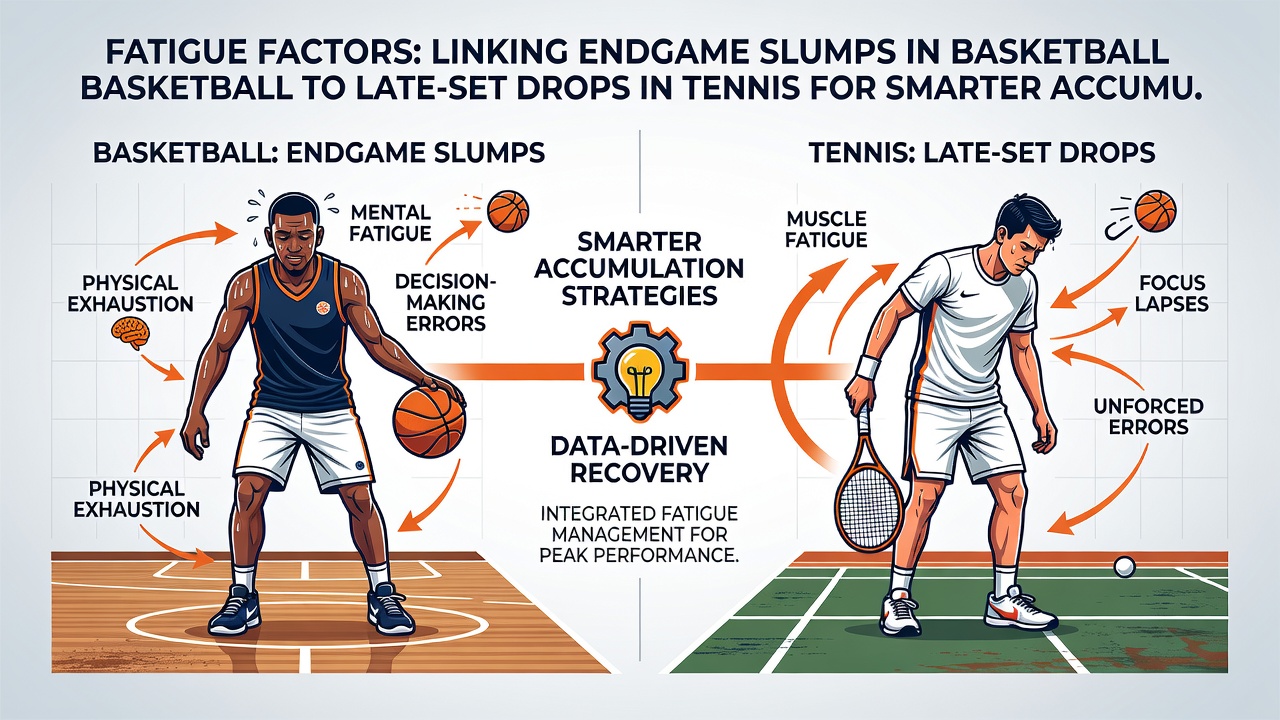
October 2026 schedules place several combined ATP and WTA events alongside the opening weeks of the NBA season, creating overlapping periods where bettors track both sports simultaneously. Tournament organizers release heat and humidity data that further influences late-set outcomes, and those statistics align with performance metrics showing increased double-fault frequency after the 90-minute mark. Researchers have observed that players competing in best-of-five matches on outdoor hard courts experience the most pronounced drops in return game success during final sets, while indoor events produce slightly milder but still measurable declines.
Accumulator Construction Using Cross-Sport Fatigue Signals
Betting platforms that allow combined basketball and tennis wagers enable users to incorporate fatigue indicators into multi-leg selections rather than relying solely on historical win rates. When NBA teams face the second half of a back-to-back and an ATP match reaches a deciding set after two hours of play, the combined probability adjustments reflect documented performance decrements in both disciplines. Figures from recent seasons show that accumulators pairing rested basketball sides with tennis matches under two hours produce different return profiles than those ignoring time-on-court variables.
Those who analyze schedule density note that October 2026 features compressed tennis calendars overlapping with NBA opening night fixtures, amplifying the need to monitor cumulative minutes and travel distances. Performance databases record that basketball teams with three or more players exceeding 35 minutes in prior games post lower fourth-quarter net ratings, while tennis players exceeding 2.5 hours of court time show reduced hold percentages in final sets. These independent datasets can be layered into accumulator models that adjust stake sizing based on verified workload thresholds rather than narrative momentum alone.
Conclusion
Performance records across basketball and tennis demonstrate that fatigue produces repeatable statistical signatures in endgame and late-set situations, signatures that accumulator strategies can incorporate through schedule and duration filters. Data from league tracking systems and sports science reports continue to refine these thresholds, allowing precise integration of physiological indicators into multi-leg selections without reliance on subjective assessments. As overlapping calendars intensify in late 2026, the value of aligning these cross-sport metrics grows proportionally with the volume of available combined markets.