Seasonal Cycles Driving Value in Football, Tennis and Basketball Betting Markets
Ulrich Neumann · Aug 5, 2026

Seasonal Cycles Driving Value in Football, Tennis and Basketball Betting Markets
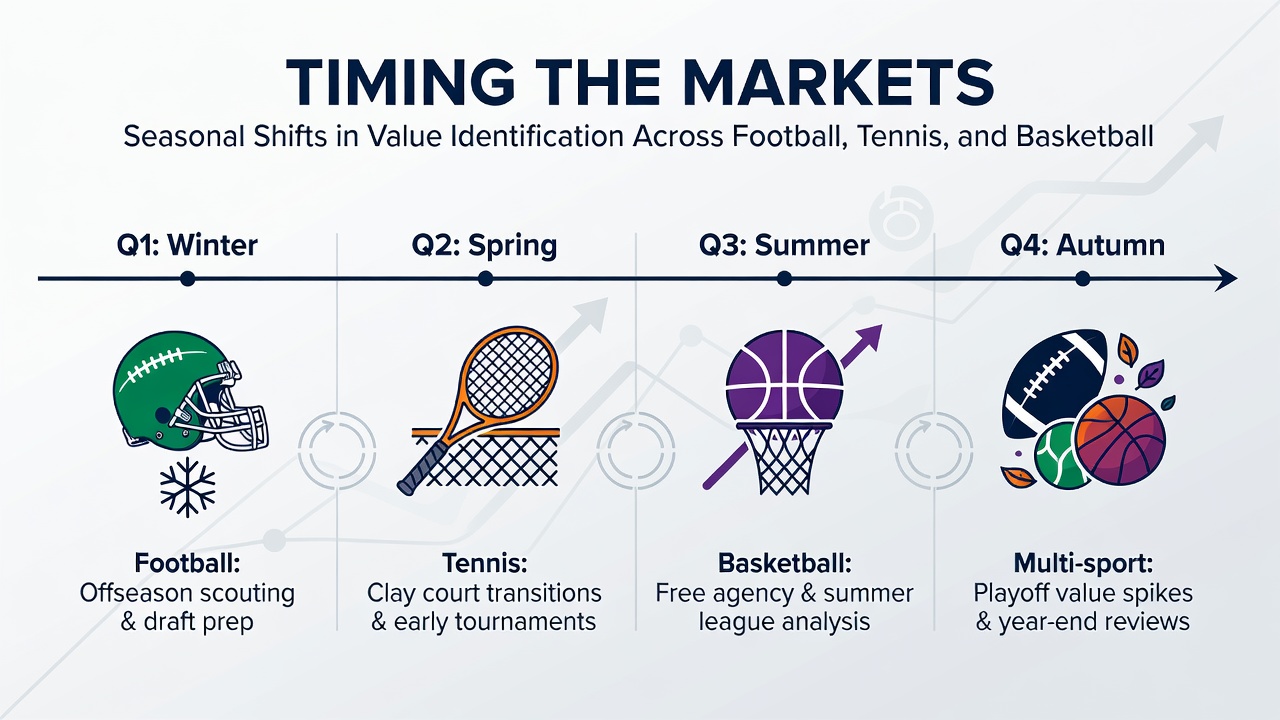
Betting markets for football, tennis and basketball display measurable shifts in odds and value opportunities that align with calendar cycles, league schedules and weather patterns, and data from multiple jurisdictions shows these patterns repeat across seasons. Observers note that line movements often accelerate in the weeks before major tournaments or league restarts, while mid-season lulls produce different inefficiencies in each sport.
Football Markets and Annual Rhythm
European football leagues typically resume pre-season friendlies in July and August, and these fixtures create early windows where bookmaker models adjust for squad rotations and travel fatigue. Research from European sports analytics groups indicates that home advantage metrics fluctuate during the opening month, with newly promoted sides showing wider variance in expected goal differentials compared to later months. August 2026 sits at the start of several domestic campaigns, and historical records reveal that early-season over/under totals on goals often deviate from league averages because defensive structures take time to settle after the summer break.
Winter breaks in leagues such as the Bundesliga and Serie A introduce another inflection point where teams return with altered fitness profiles, and betting exchanges record increased liquidity on both team totals and player props during the first post-break round. Those who track injury databases observe that muscle strain reports rise after the pause, shifting line values on matches involving squads with limited squad depth.
Tennis Tournaments and Surface Transitions
Tennis calendars divide the year into hard-court, clay and grass segments, and each surface change prompts rapid re-pricing of player win probabilities by oddsmakers. Data compiled by academic researchers at institutions in Australia and Canada demonstrates that serve-hold percentages shift measurably between surfaces, producing value on underdogs who excel on the upcoming court type yet remain under-weighted in early tournament lines. The US Open swing, which begins in late August, coincides with the tail end of the North American hard-court season and often features compressed schedules that elevate fatigue factors for players competing in both singles and doubles.
One study released by a Canadian university sports science department found that five-set matches in best-of-five events during late summer produce higher rates of retirement betting outcomes than equivalent events held in spring, and this pattern influences live betting liquidity on retirements and walkovers. Bettors monitoring ranking points and draw sizes note that qualifiers entering main draws at this stage frequently carry different implied probabilities than their ATP or WTA rankings suggest.
Basketball Schedules and Conference Play
Basketball betting lines, particularly in the NBA and European domestic leagues, exhibit seasonal compression around All-Star breaks and international windows, and these interruptions alter pace-of-play statistics that feed into totals markets. Figures released by the Nevada Gaming Control Board track how totals lines move after extended breaks, with scoring averages rising once teams re-acclimate to competitive minutes. College basketball conferences in the United States begin conference play in early January, and this transition creates separate value pockets for teams transitioning from non-conference schedules where strength-of-schedule adjustments lag behind actual performance.
Summer league and exhibition games ahead of the 2026-27 NBA campaign supply early indicators for rookies and role players, and oddsmakers incorporate these performances into season-long futures within weeks of the events. Those tracking player usage rates find that minutes restrictions in pre-season tilt prop betting markets toward conservative projections that sometimes undervalue late-season surges once playoff seeding clarifies.
Cross-Sport Overlaps in August 2026
August 2026 places football pre-season fixtures alongside the conclusion of the tennis hard-court swing and the ramp-up of basketball training camps, and this convergence concentrates liquidity across multiple sportsbooks. Industry reports from the European Gaming and Betting Association note that operators adjust risk parameters when overlapping events create correlated betting interest, such as punters combining football accumulator legs with tennis match-winner selections from the same geographic region. Weather anomalies in late summer also affect outdoor tennis and certain football venues, and these variables appear in model updates that shift totals lines faster than in other calendar months.
Market makers respond by widening spreads on player props involving athletes with heavy recent schedules, and exchanges record higher volumes on same-game parlays that bundle football goalscorer markets with basketball rebound props during the overlap period. Historical transaction data shows these multi-sport combinations attract steady interest when seasonal resets coincide.
Conclusion
Seasonal patterns in football, tennis and basketball betting markets arise from recurring schedule structures, surface changes, weather influences and recovery periods, and quantitative records across jurisdictions confirm that these cycles produce identifiable shifts in line value. August 2026 represents one such convergence point where pre-season football, late-summer tennis and basketball preparation overlap, and operators adjust pricing models accordingly. Observers monitoring these calendars can map expected liquidity changes and variance windows without relying on subjective forecasts, relying instead on documented historical movements and schedule-driven data.